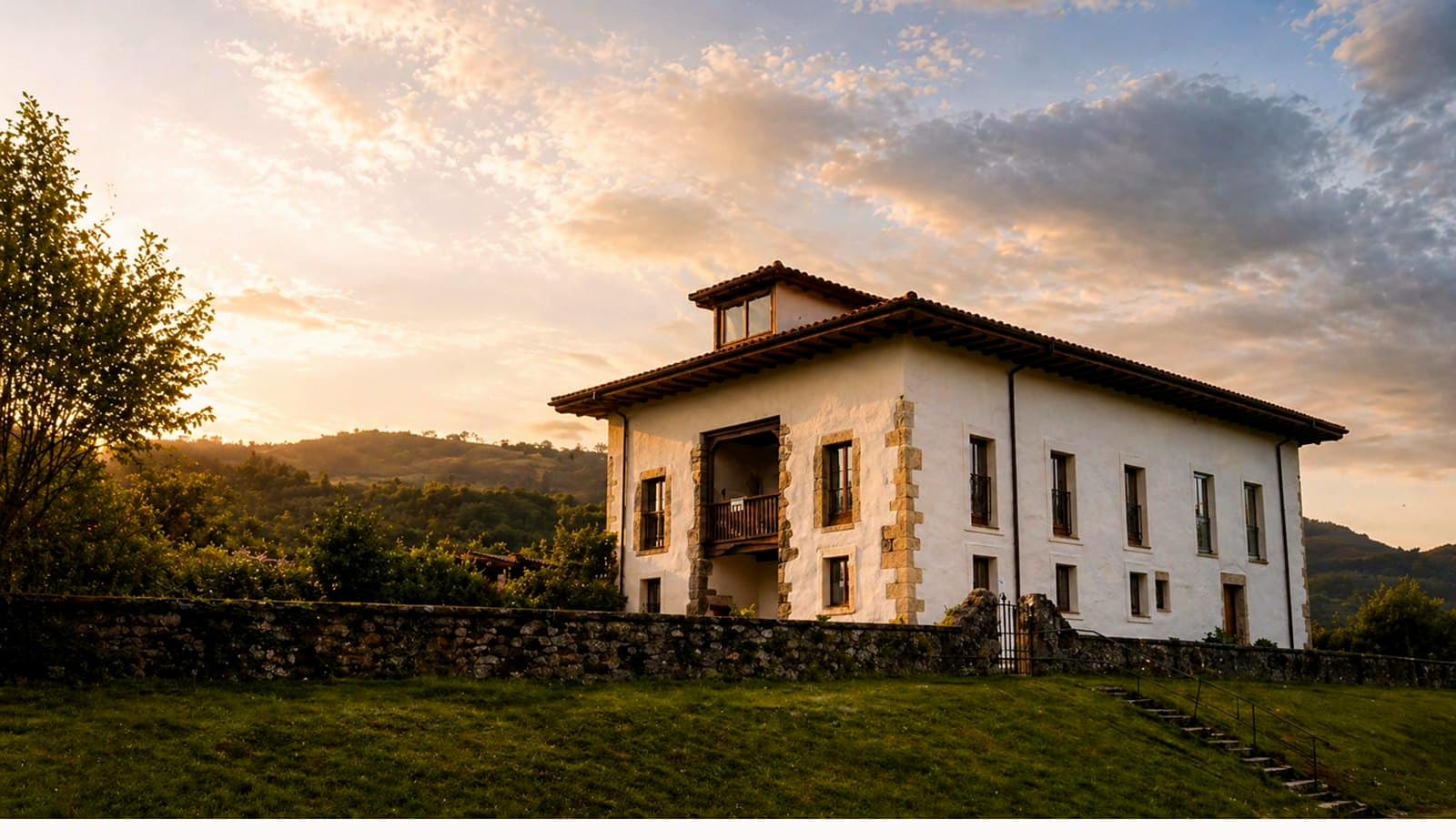
La Casona de Onís is a Green Principals project, and sustainability here is not an addition: it is the principle behind every decision of the restoration. The circular economy — reusing before manufacturing, conserving before replacing — avoids waste, saves resources and, as it happens, makes better buildings. Restoring an 1860 house with reclaimed and natural materials takes more time and more craft than putting up a new one, but it keeps what was already there and supports the craftspeople and suppliers of eastern Asturias.


More than 600 beams with a former life
The Casona's beams are older than the house itself. Over decades they were gathered from other buildings across the north of Spain, stored, restored — and today they hold up a building once again. Oak, chestnut and sabina juniper: timbers with centuries of history, given a second life here. It is the clearest expression of the principle that guided the whole restoration: cut nothing new where something with a past can serve instead.

Cork from the Iberian forests
The entire building is insulated, thermally and acoustically, with boards of natural cork-oak cork up to 16 centimetres thick. A completely natural, renewable material from the Iberian forests, insulating superbly without resort to synthetics. The cork oak is not felled to obtain it: the bark is stripped, and the tree lives on.

Lime mortar, the way it was always done
The renders and repointing throughout the house are done in lime mortar. Lime lets the walls breathe naturally, regulates humidity, and makes the Casona a healthier place to be. It is also what an 1860 building asks for: cement seals stone in and damages it; lime lets it breathe.
The principle doesn't end with the building work: it guides how we run the house, who we buy from and what we offer our guests. If your team works on sustainability, few meeting rooms practise what they preach quite like this one.
Explore the retreats